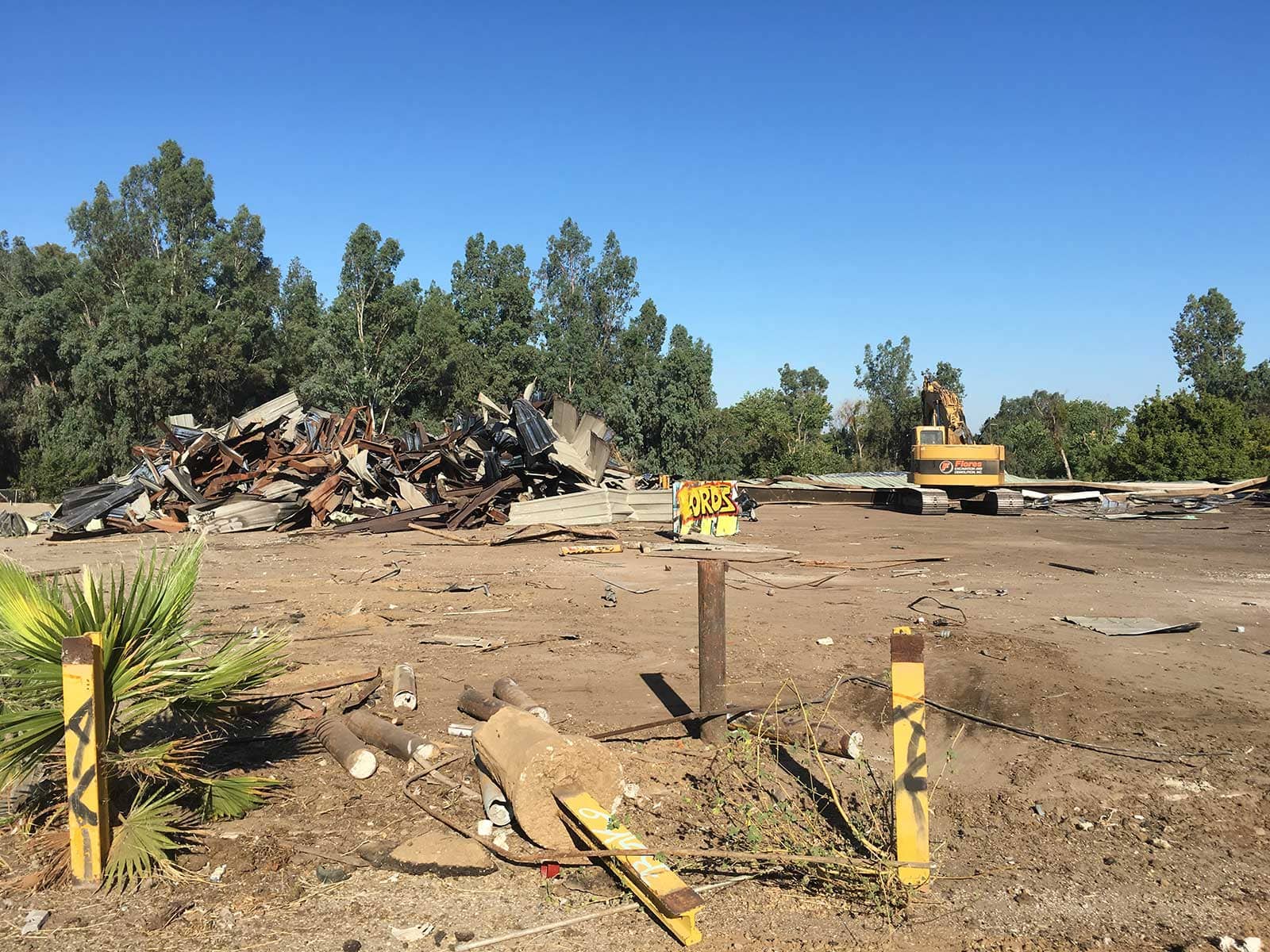

1. Start with the final site condition
Write down what stays, what goes, and what the next crew needs. The answer should cover the structure, foundations, concrete, utilities, landscaping, debris, and final grade. This keeps the demolition scope tied to the property plan instead of ending at an unclear cleanup line.
2. Confirm permits and material reviews
The building department and air district decide which approvals apply to a specific property. San Joaquin County, for example, requires a demolition permit for buildings, manufactured structures, pools, and similar work. Valley Air publishes separate demolition and renovation information for asbestos compliance in the Central Valley.
Ask which surveys, notifications, releases, and inspections must be complete before the start date. Keep those documents with the project record.
3. Control utilities before equipment arrives
Power, gas, water, sewer, communications, and private site lines need a written coordination plan. OSHA requires covered service lines to be shut off, capped, or otherwise controlled outside the building line before demolition begins, with affected utility companies notified in advance.
Where ground disturbance is covered by California's underground-notification law, follow the applicable California 811 process. A locate ticket does not replace the need to identify private lines or follow the responses and markings for the site.
4. Plan access, debris, and the handoff
Show the contractor gates, soft ground, overhead lines, occupied areas, neighboring property, truck limits, and items that need protection. Agree on debris separation, approved destinations, tickets or receipts, dust controls, and cleanup expectations.
Before work starts, the proposal and site plan should assign each open item to the owner, contractor, utility, consultant, or agency. That responsibility list is more useful than a start date built on assumptions.
5. Verify the contractor and written agreement
Check the current contractor license and make sure the business on the proposal matches the license record. Compare written bids against the same scope, then put the work, price, schedule, permits, exclusions, and change process in the agreement before work starts.
Costs, permit steps, codes, disposal requirements, and site conditions change. Confirm current requirements with the responsible agencies and qualified professionals before work begins.
Official sources
These agencies and public resources support the planning information in this article. Open the current source before making project decisions.
- OSHA: Demolition preparatory operationsOpen official website in new tab
- San Joaquin County: Demolition permit informationOpen official website in new tab
- Valley Air District: Demolition and renovation requirementsOpen official website in new tab
- California law: Underground utility notificationOpen official website in new tab
- California CSLB: How to find the right licensed contractorOpen official website in new tab