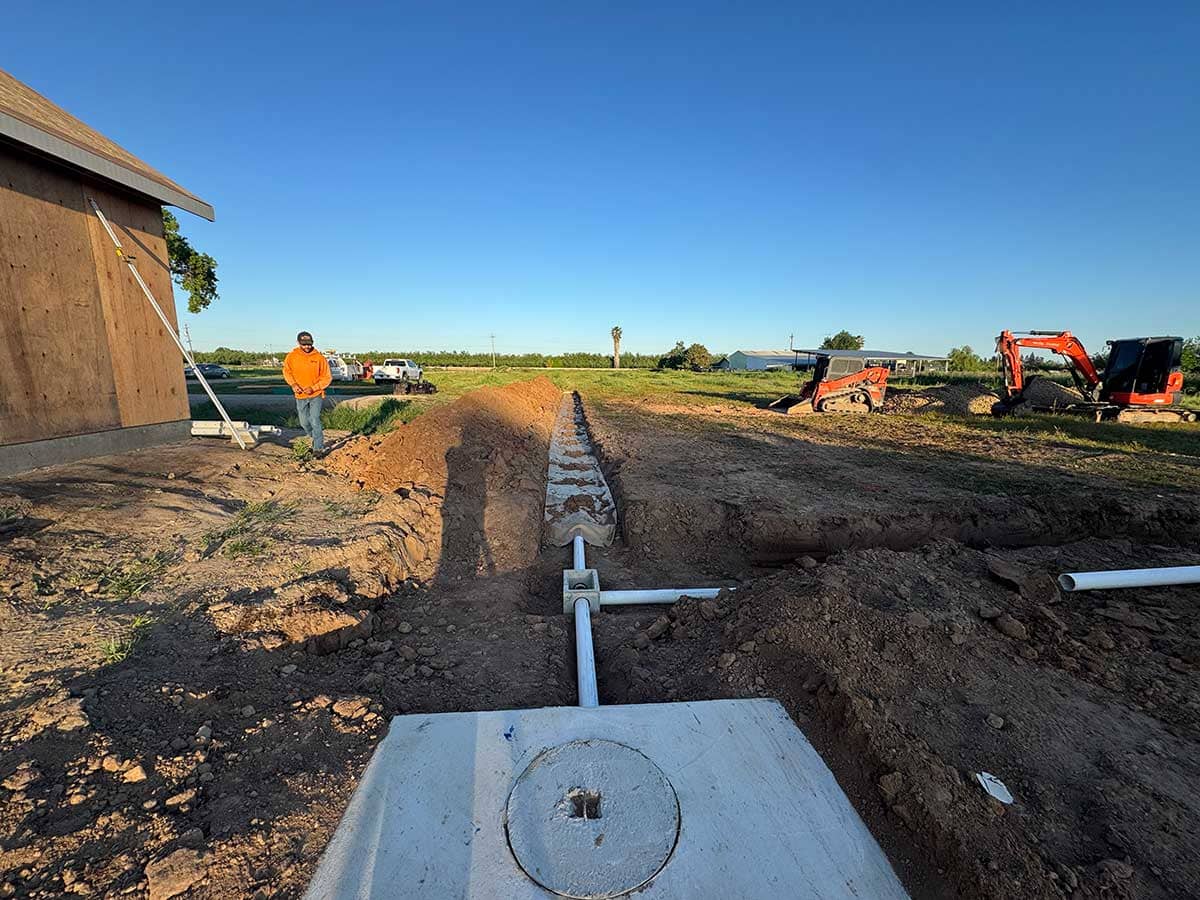

Excavation sets the conditions for the work that follows
Foundations, slabs, utilities, roads, and drainage systems depend on the excavation reaching the planned location and elevation. Removing too little material can leave the next trade without room to work. Removing too much can create extra fill, testing, support, or redesign work.
The project documents should define the excavation and the acceptable subgrade. If the crew finds undocumented fill, buried debris, unexpected rock, water, or soil that differs from the available information, the design team needs a chance to review it before the condition is hidden.
Drainage and soil handling affect the whole site
Open ground changes how water moves. Runoff can enter the excavation, carry sediment off site, soften access roads, or collect against adjacent work. Temporary drainage and erosion controls should stay coordinated with the excavation sequence and the approved stormwater documents.
Excavated soil also needs a planned use or destination. Mixing topsoil, unsuitable material, and approved fill can create avoidable handling and testing. Separate stockpiles, clear labels, and protected storage areas help the project team keep track of what can be reused.
Utilities and nearby structures need early decisions
Utility damage can injure workers, interrupt service, and stop the project. The team must follow California notification rules, verify required responses, and use the methods called for as work approaches marked installations. Private and abandoned lines may need additional investigation.
Excavation can also affect nearby foundations, walls, sidewalks, roads, and other improvements. Cal/OSHA requires support or another protective method when excavation endangers an adjacent structure. Decisions about underpinning, shoring, or engineered support belong to qualified professionals.
Good records protect the handoff
Inspection reports, test results, survey checks, utility records, material tickets, and approved changes show what happened before the excavation was covered. The records should match the requirements in the plans, permits, and contracts.
- Pause for unexpected soil, water, utilities, buried material, or damaged controls.
- Confirm who can approve a field change and how it will be documented.
- Complete required inspections before backfill or concrete placement.
- Give later trades the current grades, test results, and unresolved items.
Costs, permit steps, codes, disposal requirements, and site conditions change. Confirm current requirements with the responsible agencies and qualified professionals before work begins.
Official sources
These agencies and public resources support the planning information in this article. Open the current source before making project decisions.
- Cal/OSHA Title 8, Section 1541: General Requirements for ExcavationsOpen official website in new tab
- US EPA: Land Grading Best Management PracticeOpen official website in new tab
- US EPA: Stormwater Discharges from Construction ActivitiesOpen official website in new tab
- USDA Natural Resources Conservation Service: Web Soil SurveyOpen official website in new tab