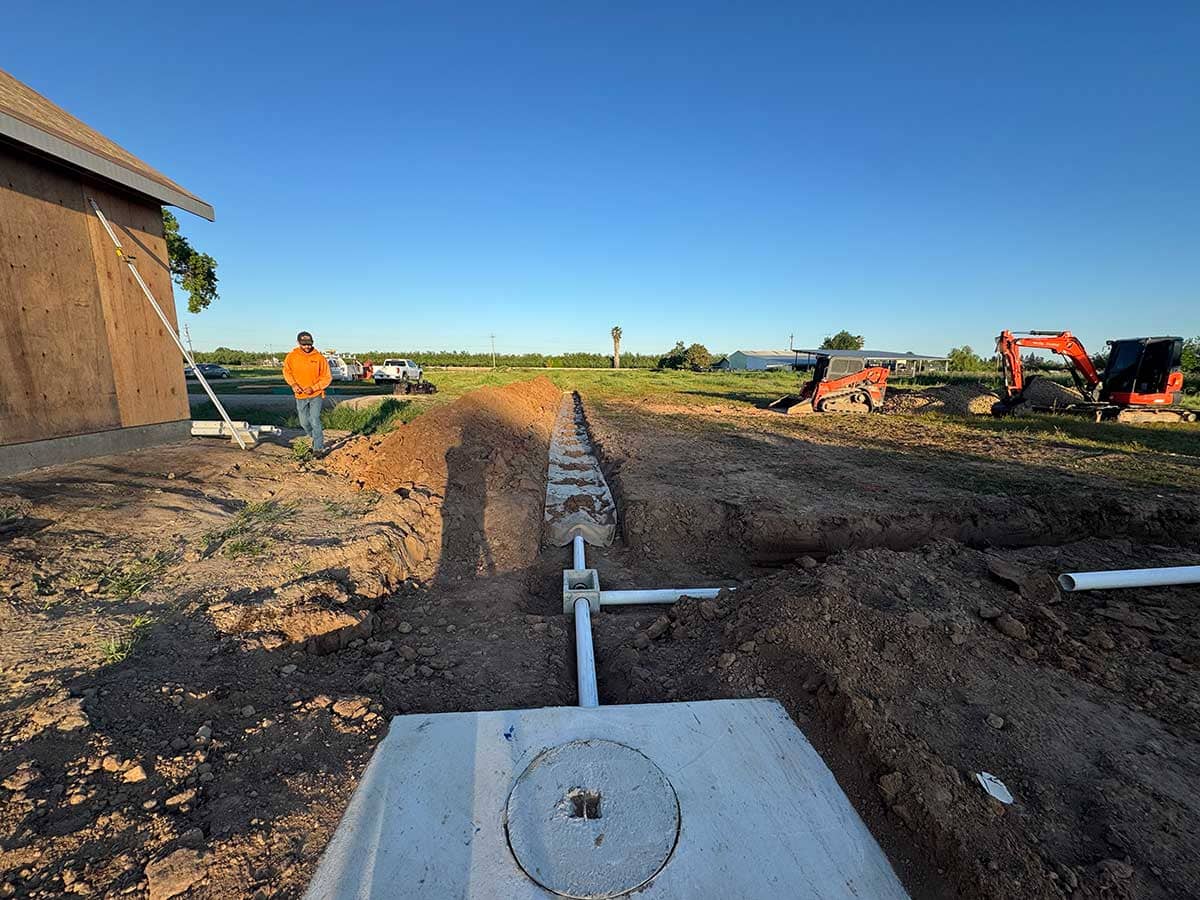

Define the excavation before scheduling equipment
The process begins with the current plans, survey control, permits, soil information, and a clear end condition. The team should know the excavation limits, target elevations, required slopes, structures and utilities that remain, material destinations, and the work that follows excavation.
A site walk can expose conflicts that drawings do not show, such as narrow access, overhead lines, active operations, neighboring structures, soft ground, or an unclear place to stockpile soil. Record those conditions and assign responsibility before the price and schedule are final.
Locate utilities and prepare the work area
California law requires the planned excavation area to be marked before the regional notification center is contacted. Except in an emergency, the excavator must provide notice within the legal window and wait for the required responses before work begins. The project may also need separate locating for private or undocumented lines.
Site preparation includes access, traffic controls, surface drainage, protection for features that remain, and the required erosion and sediment controls. Survey marks and utility marks need to stay visible and protected as equipment moves through the site.
Excavate under the site safety and engineering controls
The excavation proceeds to the lines and grades shown on the project documents. The competent person monitors conditions that affect workers, including soil, water, material near the edge, equipment loads, access, nearby structures, and the protective system. Work should stop when field conditions do not match the plan or create a new hazard.
Material handling is part of the excavation plan. Suitable soil may be stockpiled for an approved later use, while excess or unsuitable material needs a defined destination. Stockpiles and haul routes must also fit the safety, drainage, dust, and traffic controls for the site.
Inspect, backfill, verify, and document the handoff
Required inspections and underground work need to happen before the excavation is covered. Backfill material, placement, testing, and final grade should follow the plans and specifications. The team should not bury unresolved utility conflicts, unsuitable material, standing water, or work that still needs inspection.
- Record inspections, testing, utility work, and approved changes.
- Confirm the required elevation and condition before backfill.
- Protect completed underground work during material placement.
- Restore drainage, access, and erosion controls as the excavation closes.
- Give the next trade the survey and test information required by the project.
Costs, permit steps, codes, disposal requirements, and site conditions change. Confirm current requirements with the responsible agencies and qualified professionals before work begins.
Official sources
These agencies and public resources support the planning information in this article. Open the current source before making project decisions.
- California Government Code Section 4216.2: Excavation NotificationOpen official website in new tab
- Cal/OSHA Title 8, Section 1541: General Requirements for ExcavationsOpen official website in new tab
- Cal/OSHA Title 8, Section 1541.1: Requirements for Protective SystemsOpen official website in new tab
- USDA Natural Resources Conservation Service: Web Soil SurveyOpen official website in new tab