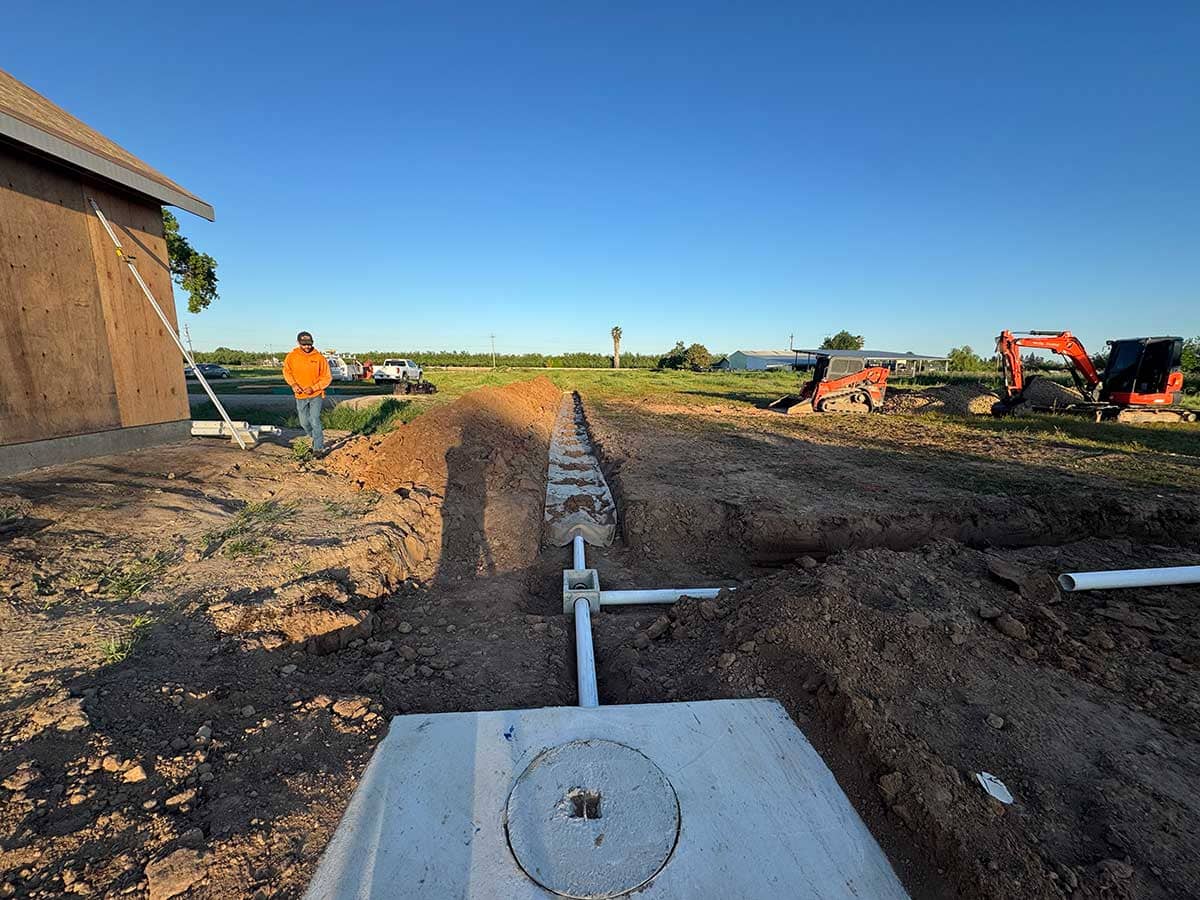

Plan for the hazards around the excavation
The safety plan starts outside the hole. The team needs to account for underground utilities, overhead loads, traffic, nearby foundations, loose material, water, and the route workers and equipment will use. California rules require the approximate location of expected underground installations to be determined before an excavation is opened.
A public utility ticket does not replace a full site review. Private lines, tanks, irrigation, abandoned services, and undocumented work may need separate investigation. If digging could affect a building, wall, pavement, or other structure, the responsible professionals need to decide how it will be protected before work reaches it.
Use a protective system selected for the actual conditions
Cave-in protection depends on the excavation, soil, water, nearby loads, and changing field conditions. Cal/OSHA recognizes approaches such as sloping, benching, shoring, and shielding. The employer must select and build the system under the applicable standard or written data. A competent person assesses soil and changing conditions, and some designs require a registered professional engineer.
Workers should not enter an excavation until the required inspection and protective measures are in place. The limited exception for an excavation less than five feet deep applies only when a competent person finds no sign of a potential cave-in. Depth alone does not establish that an excavation is safe.
Inspect the site as conditions change
Cal/OSHA calls for a competent person to inspect excavations, nearby areas, and protective systems before work starts and as needed during the shift. Another inspection is required after rain or another event that raises the hazard. If the inspection finds a dangerous condition, exposed workers must leave the area until it is corrected.
The daily review also covers access and exit routes, material near the edge, equipment movement, water, loose soil or rock, and possible hazardous atmospheres. These controls need to follow the work as the excavation changes shape and depth.
- Confirm the utility ticket, responses, field marks, and any private-locate work.
- Name the competent person and document when inspections are required.
- Keep the protective-system data or engineering documents available at the site.
- Set clear stop-work rules for rain, water, damaged protection, utility conflicts, or changing soil.
What an owner should confirm before work starts
Ask who controls the excavation, who can stop the work, and who is responsible for permits, utility coordination, protective systems, traffic control, and inspections. The written scope should also identify any work by an engineer, utility owner, testing firm, or other specialist.
Safety requirements vary with the site and scope. The contractor and design team should apply the current federal, state, and local rules to the project rather than relying on a general checklist.
Costs, permit steps, codes, disposal requirements, and site conditions change. Confirm current requirements with the responsible agencies and qualified professionals before work begins.
Official sources
These agencies and public resources support the planning information in this article. Open the current source before making project decisions.
- Cal/OSHA Title 8, Section 1541: General Requirements for ExcavationsOpen official website in new tab
- Cal/OSHA Title 8, Section 1541.1: Requirements for Protective SystemsOpen official website in new tab
- OSHA: Trenching and Excavation OverviewOpen official website in new tab
- California Government Code Section 4216.2: Excavation NotificationOpen official website in new tab