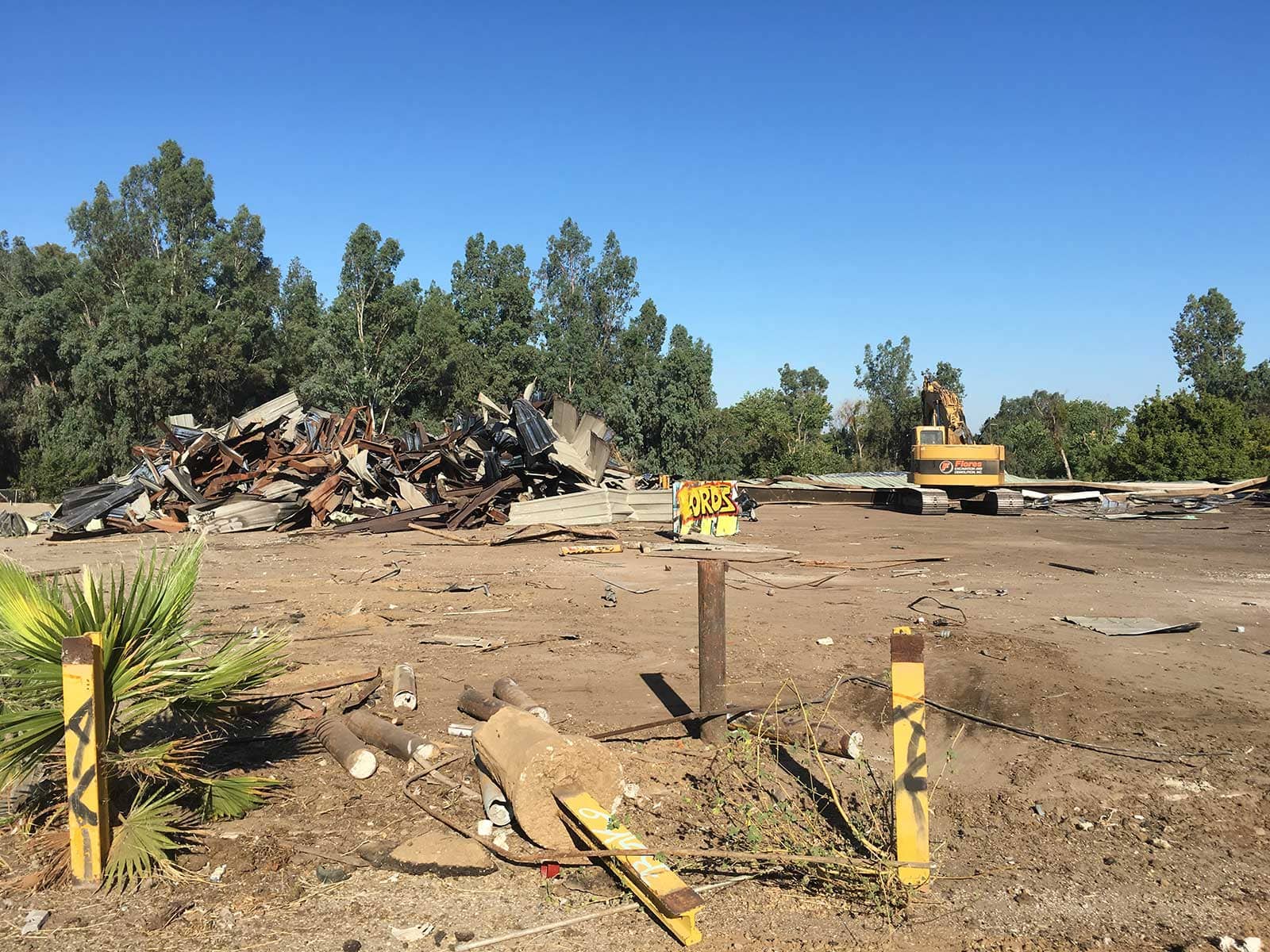

Write the end condition and responsibility list
Mark every structure, slab, footing, utility, tree, fence, and surface that stays or goes. Describe the final grade, cleanup, temporary protection, and next planned use. Then assign permits, testing, utility coordination, salvage, hauling, inspections, and closeout records.
This becomes the common scope for designers, consultants, bidders, agencies, and the crew.
Complete the required reviews before scheduling
For covered demolition work, OSHA requires a competent person to complete an engineering survey before employees start demolition. Local permit, air-district, asbestos, lead, historical-resource, and environmental requirements vary by property and project.
Track each approval and dependency in one list. A target date should follow that list, not replace it.
Plan utilities, access, and daily movement
Document shutoffs, caps, services that remain live, private lines, and any ticket required by California's underground-notification law. Map equipment space, truck routes, overhead clearances, exclusion areas, neighboring property, occupied zones, and material staging.
The sequence should show how debris leaves without blocking emergency access, inspections, or the work that follows.
Close the job with evidence
Collect required inspection approvals, material and disposal records, utility documentation, photographs, change records, and the final permit status. Walk the site against the written end condition before releasing the next crew.
- Items removed and protected as scoped
- Open holes, edges, utilities, and temporary conditions resolved or transferred
- Required debris and regulated-material records received
- Final grade and access ready for the next planned step
Costs, permit steps, codes, disposal requirements, and site conditions change. Confirm current requirements with the responsible agencies and qualified professionals before work begins.
Official sources
These agencies and public resources support the planning information in this article. Open the current source before making project decisions.
- OSHA: Demolition preparatory operationsOpen official website in new tab
- Valley Air District: Demolition and renovation requirementsOpen official website in new tab
- California law: Underground utility notificationOpen official website in new tab
- CalRecycle: Construction and demolition debris recyclingOpen official website in new tab