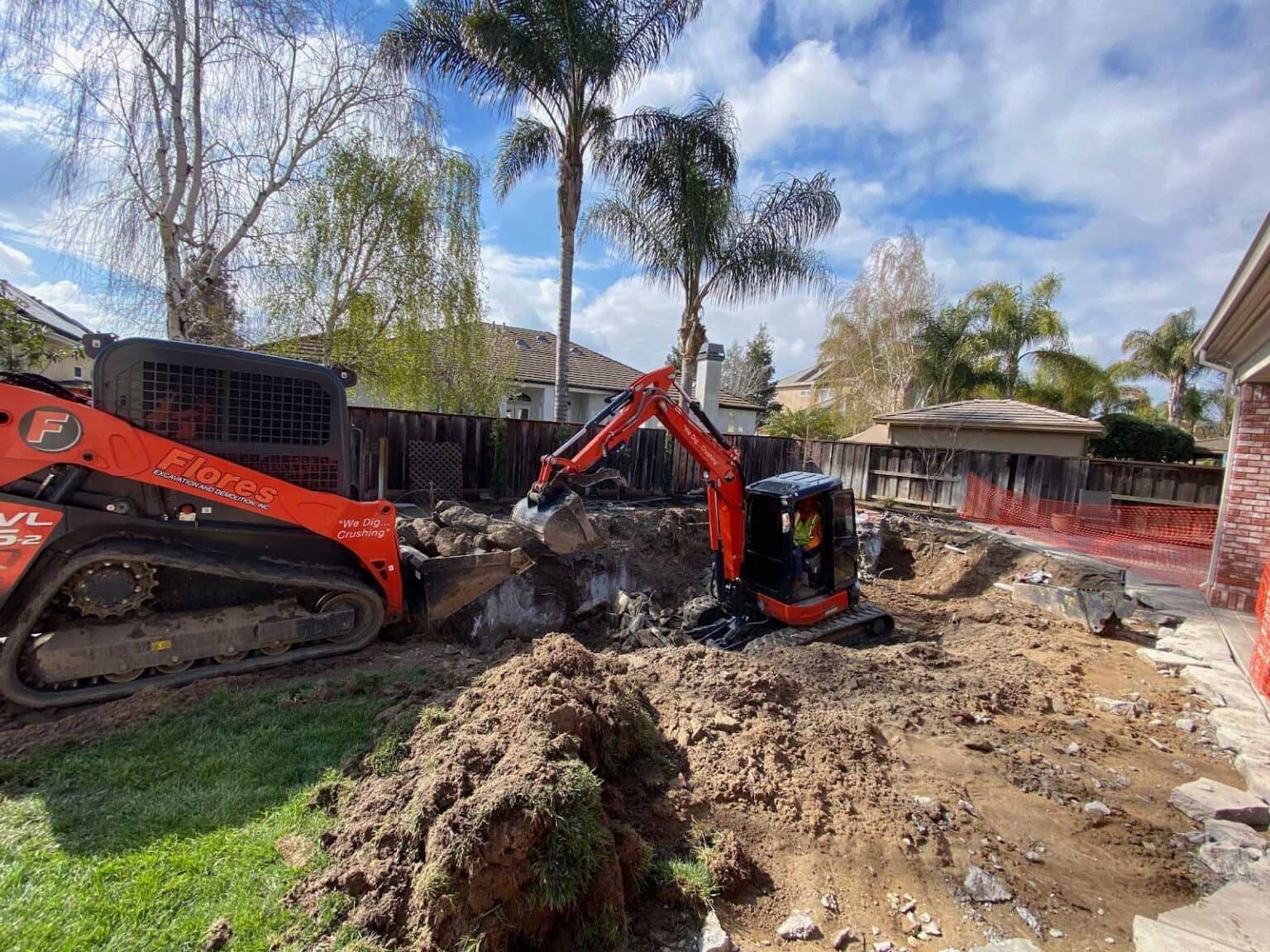

Choose the future use before the removal method
Start with what may be built or placed in the former pool area. Landscaping, a driveway, an accessory structure, and a future building can lead to different design, backfill, documentation, and review needs.
Tell the building department and contractor about that future use. Do not assume that a partial removal or abandonment will be acceptable for the property or future plan.
Compare only options the jurisdiction allows
Ask the local building department whether it permits full removal, any partial-removal option, or another approved closure method. Request the current checklist, inspection points, backfill requirements, and documents needed for final approval.
San Joaquin County specifically lists pool and spa demolition as permit work and publishes a pool backfill certificate among its demolition handouts.
Put the whole yard in the scope
The work plan should cover the shell, deck, equipment pad, utilities, drainage, fences, landscaping, access route, imported material, testing, surface finish, and debris. Mark items that stay and identify who restores them.
Discuss truck and equipment access before selecting a scope. Tight access can change the equipment, protection, loading, and schedule plan.
Preserve the closeout record
Keep the permit, inspection results, required backfill or compaction documents, photographs, disposal records, and final approval with the property file. The record should identify the approved removal method and the area completed under that permit.
Costs, permit steps, codes, disposal requirements, and site conditions change. Confirm current requirements with the responsible agencies and qualified professionals before work begins.
Official sources
These agencies and public resources support the planning information in this article. Open the current source before making project decisions.